

Ezra and Nehemiah
Jerusalem is scarred by ruin, and the work ahead is bigger than any one leader. In Ezra and Nehemiah, you step into a tense period of rebuilding where every day matters, every resource is tight, and every choice pushes your plan forward or leaves you scrambling.
This is a thematic strategy, worker placement game for 1 to 4 players built around a card driven action system. You will use a hand of cards to take actions that restore the city and shape your approach. Cards are not just actions, they are commitments. What you play into your tableau influences what you can do efficiently later, so timing and sequencing matter as much as raw power. You will focus on scoring primarily through building the temple, rebuilding city walls and gates, and teaching the Torah to returning exiles, while still juggling the supporting work that makes those achievements possible
The structure creates a strong rhythm. Six days of effort build momentum, then the Sabbath forces you to pause and account for what you have accomplished, including providing food. It keeps the game strategic but not aimless. You are constantly measuring short term efficiency against long term scoring routes. The interaction is positive and competitive, with players racing and adapting as the board state evolves and the shared space becomes more valuable.
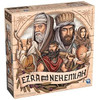
Ezra and Nehemiah

Jerusalem is scarred by ruin, and the work ahead is bigger than any one leader. In Ezra and Nehemiah, you step into a tense period of rebuilding where every day matters, every resource is tight, and every choice pushes your plan forward or leaves you scrambling.
This is a thematic strategy, worker placement game for 1 to 4 players built around a card driven action system. You will use a hand of cards to take actions that restore the city and shape your approach. Cards are not just actions, they are commitments. What you play into your tableau influences what you can do efficiently later, so timing and sequencing matter as much as raw power. You will focus on scoring primarily through building the temple, rebuilding city walls and gates, and teaching the Torah to returning exiles, while still juggling the supporting work that makes those achievements possible
The structure creates a strong rhythm. Six days of effort build momentum, then the Sabbath forces you to pause and account for what you have accomplished, including providing food. It keeps the game strategic but not aimless. You are constantly measuring short term efficiency against long term scoring routes. The interaction is positive and competitive, with players racing and adapting as the board state evolves and the shared space becomes more valuable.