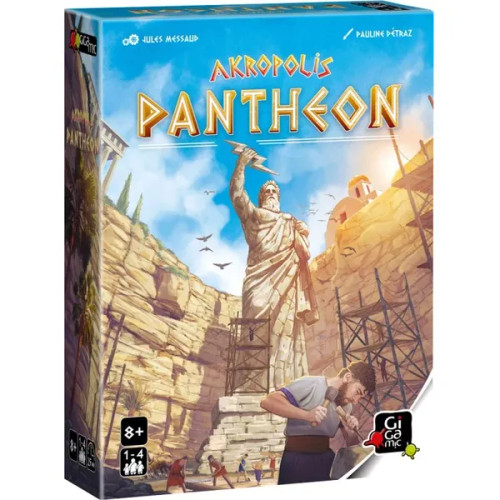




Akropolis: Pantheon (Expansion)
This expansion transforms the competitive city building of Akropolis into a thoughtful cooperative experience where players work together to construct a capital worthy of the Greek gods. Instead of competing for the highest score, architects now share a single city and a common objective, creating a calmer but no less strategic challenge focused on coordination and long-term planning.
At the start of the game players choose a scenario representing a famous ancient city, each with its own difficulty level and architectural requirements. Using the familiar tile-laying and elevation mechanics of the base game, players take turns selecting and placing city tiles into the shared capital. As the city grows, players must carefully position altars dedicated to different gods, each introducing specific scoring conditions that shape how districts should be built and layered.
Every decision matters because inefficient placement affects the group as a whole. Communication and timing are essential as players balance expanding districts, increasing building height, and meeting divine objectives before tiles run out. The scenarios offer varied goals that encourage replay and gradual mastery.
Akropolis: Pantheon (Expansion)
This expansion transforms the competitive city building of Akropolis into a thoughtful cooperative experience where players work together to construct a capital worthy of the Greek gods. Instead of competing for the highest score, architects now share a single city and a common objective, creating a calmer but no less strategic challenge focused on coordination and long-term planning.
At the start of the game players choose a scenario representing a famous ancient city, each with its own difficulty level and architectural requirements. Using the familiar tile-laying and elevation mechanics of the base game, players take turns selecting and placing city tiles into the shared capital. As the city grows, players must carefully position altars dedicated to different gods, each introducing specific scoring conditions that shape how districts should be built and layered.
Every decision matters because inefficient placement affects the group as a whole. Communication and timing are essential as players balance expanding districts, increasing building height, and meeting divine objectives before tiles run out. The scenarios offer varied goals that encourage replay and gradual mastery.