

Hues and Clues
Hues and Cues
This vibrant party game is all about how differently people see colour. Using nothing more than words and a shared colour board, players try to communicate subtle shades and tones, discovering just how subjective perception can be.
Each round, one player becomes the clue giver. They secretly choose a colour from the board, then describe it using a single word. Other players place their markers on the colour they believe best matches that description. After this, the clue giver offers a second clue using a short phrase, giving everyone a chance to adjust their guess. Once all guesses are locked in, the chosen colour is revealed and points are awarded based on proximity.
The brilliance of Hues and Cues lies in its simplicity. There is no right vocabulary for colour, and no technical knowledge required. A word like “warm” or “stormy” might mean very different things to different people, and that ambiguity is where the fun lives. The game thrives on conversation, interpretation, and the small moments of surprise when guesses land unexpectedly close or wildly far away.
Interaction is constant and inclusive. Everyone is involved every round, either describing, guessing, or reacting to the results. There is no penalty for being wrong, which makes the game welcoming for players of all ages and experience levels. It works equally well as a light icebreaker or as the centrepiece of a relaxed social evening.
Hues and Cues is best enjoyed with a group that likes to talk, laugh, and think creatively. It rewards empathy more than strategy and encourages players to see the world through each other’s eyes.
Hues and Clues
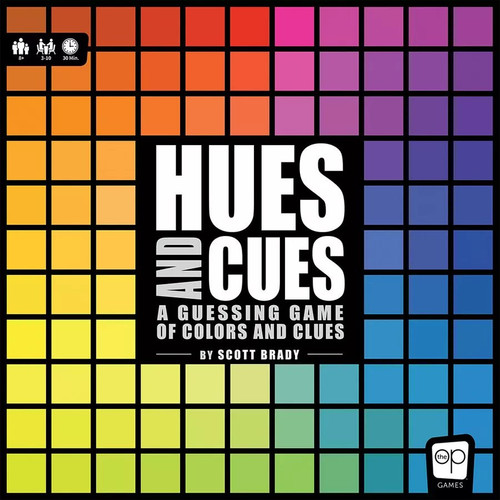
Hues and Cues
This vibrant party game is all about how differently people see colour. Using nothing more than words and a shared colour board, players try to communicate subtle shades and tones, discovering just how subjective perception can be.
Each round, one player becomes the clue giver. They secretly choose a colour from the board, then describe it using a single word. Other players place their markers on the colour they believe best matches that description. After this, the clue giver offers a second clue using a short phrase, giving everyone a chance to adjust their guess. Once all guesses are locked in, the chosen colour is revealed and points are awarded based on proximity.
The brilliance of Hues and Cues lies in its simplicity. There is no right vocabulary for colour, and no technical knowledge required. A word like “warm” or “stormy” might mean very different things to different people, and that ambiguity is where the fun lives. The game thrives on conversation, interpretation, and the small moments of surprise when guesses land unexpectedly close or wildly far away.
Interaction is constant and inclusive. Everyone is involved every round, either describing, guessing, or reacting to the results. There is no penalty for being wrong, which makes the game welcoming for players of all ages and experience levels. It works equally well as a light icebreaker or as the centrepiece of a relaxed social evening.
Hues and Cues is best enjoyed with a group that likes to talk, laugh, and think creatively. It rewards empathy more than strategy and encourages players to see the world through each other’s eyes.